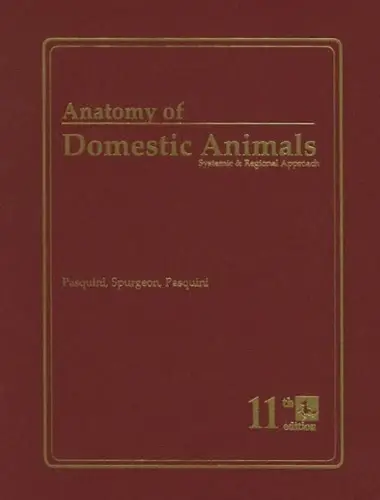
Anatomy of Domestic Animals Systemic & Regional Approach 11th Edition
by Chris Pasquini, Tom Spurgeon, Susan Pasquini
Anatomy of domestic animals studies the structure of key species—horses, cattle, dogs, pigs, sheep, and chickens—using systemic and regional approaches. It covers major body systems (skeletal, digestive, nervous, cardiovascular) and regions (head, neck, thorax, abdomen, limbs) to understand bodily functions, support clinical veterinary practice, and compare species, often through detailed dissection.
Key Aspects of Domestic Animal Anatomy
- Species Covered: Primary focus on the horse, ox, dog, pig, and sheep, with additional information on cats, rabbits, and birds.
- Systems Approach: Detailed study of the locomotor (skeleton, muscles, joints), digestive, respiratory, urinary, genital, and nervous systems.
- Regional Approach: Examination of bodily regions, including the head, neck, thoracic cavity, abdominal cavity, pelvic cavity, and limbs.
- Clinical Relevance: Used in veterinary medicine for understanding locomotion, surgical anatomy, and medical imaging.
Main Anatomical Divisions & System
- Skeletal System: Provides structural support, protection for organs (e.g., ribs protecting the lungs/heart), and enables movement through muscular attachment.
- Nervous System: Comprises the brain, spinal cord, and nerves for communication, sensory input, and regulation of bodily functions.
- Body Planes: Defined by the median plane (bilateral symmetry), sagittal plane (parallel to median), and transverse plane (perpendicular to the longitudinal axis).
This field is crucial for understanding the structural, functional, and developmental aspects of animals, essential for veterinary diagnostics and treatment.
Instant Direct Link For Paid Membership: –